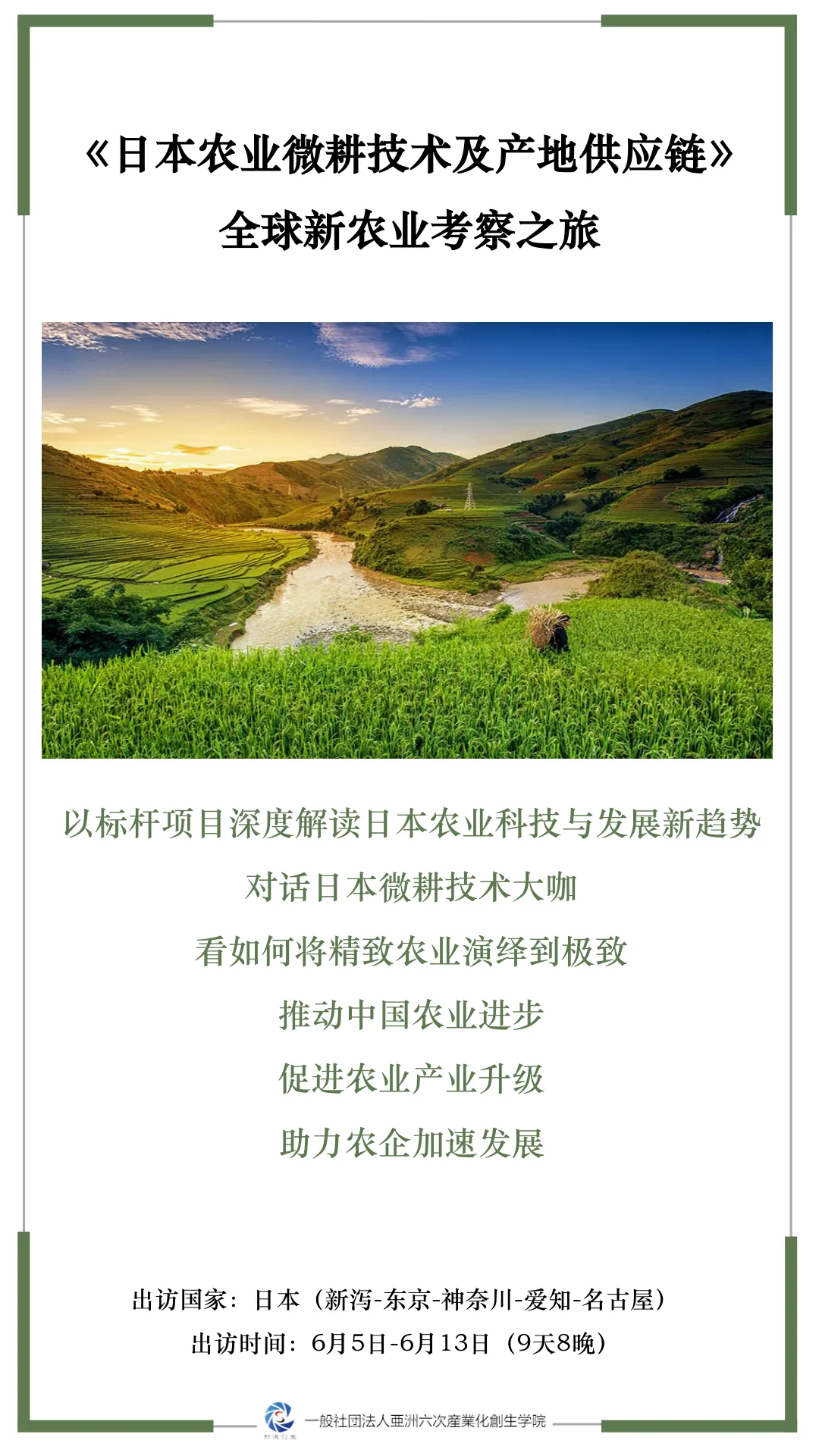
Exploring Japan’s benchmark farms in micro-cultivation technology and origin supply chain management.
In a country where mountainous and hilly terrain accounts for 80% of the land, Japan faces the challenge of an ageing agricultural workforce — half of its farmers are 65 or older. Despite this, the country continues to feed a population of 125 million, thanks in large part to the adoption of advanced agricultural technologies.
In a society with such severe demographic ageing, the sustainability of agriculture becomes critically important. Applying highly efficient technological solutions to boost agricultural productivity is key.
Farmers are able to achieve higher output with fewer labor inputs, dramatically improving productivity and raising incomes. Per-capita annual incomes in the sector can reach 500,000 RMB — higher than white-collar wages in major cities like Tokyo and Osaka — reflecting the high value placed on skilled agricultural work.
This elevated income also signals the important role agriculture plays in the national economy, and the respect and recognition accorded to those who work in it. It is expected to encourage more people to enter the agricultural sector, helping to ease the ageing labor problem and inject fresh energy into the industry’s sustainable development.